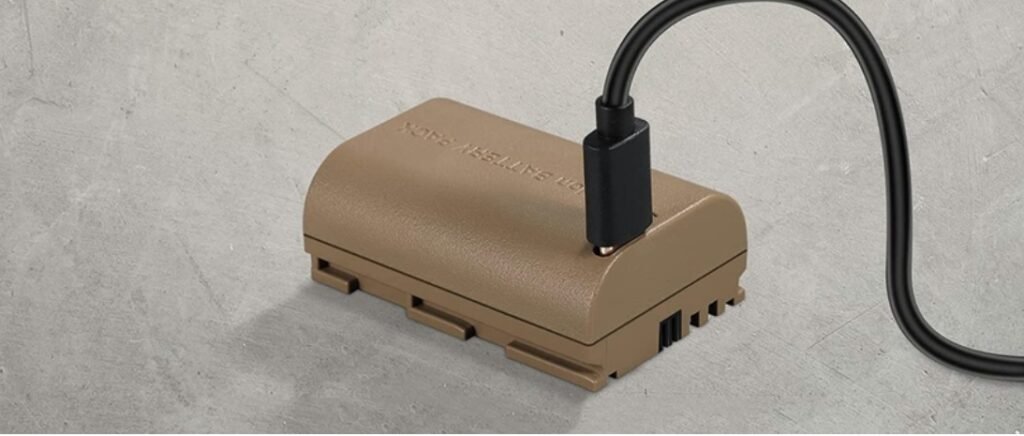
For years, battery life was a footnote on a camera spec sheet — a number you glanced at after the sensor, the autofocus, and the price. In 2026, that order has flipped. Ask a mirrorless shooter what made them pick their camera, and the answer is increasingly the same: how long it lasts on a single charge.
That shift is not an accident. Cameras got hungrier at the same time batteries stayed roughly the same size. High-resolution sensors, 4K and 8K video, eye-tracking autofocus, and bright electronic viewfinders all draw power constantly. A camera that shoots 800 frames in a lab test can run dry halfway through a wedding, a wildlife morning, or a travel day — and no photographer blames the spec sheet when it happens. They blame the battery.
Why the CIPA number and your real shooting never match
The headline battery-life figure most brands publish comes from the CIPA test: a fixed cycle of shots, pauses, flash use, and power cycles. It is useful for comparing cameras against each other, but it is a poor predictor of your day.
Real shooting breaks the test in a few predictable ways:
- Video drains far faster than stills. Continuous sensor readout, encoding, and screen-on time can cut a rated 500-shot battery to a couple of hours of footage.
- Autofocus never sleeps. Subject tracking and eye detection keep the processor working even between shots.
- Cold, heat, and screens cost power. Reviewing images on a bright LCD, running Wi-Fi transfers, or shooting in winter all eat into the same charge.
- Burst shooting is deceptive. You may fire fewer frames than the rating promises, but the camera stays awake, focused, and writing the whole time.
The practical rule: treat the CIPA rating as a best case, and plan your kit for roughly half to two-thirds of it on a demanding day.
The scenes that kill a battery first
Not all shooting days are equal. These are the situations where photographers most often run out:
- Weddings and events. Long hours, no breaks, and no second chance — the camera is on from preparations to the last dance.
- Wildlife and sports. Hours of waiting with autofocus engaged, then bursts when the action starts.
- Travel days. One battery, no charger access, and a full itinerary — the classic case for carrying a spare.
- Video-first shoots. Interviews, vlogging, and B-roll keep the sensor and screen running nonstop.
If any of these describe your work, a single battery was never the plan — the plan is a rotation.
Even camera makers are treating battery life as the headline
The industry’s direction confirms the shift. Reports in October 2026 say Fujifilm is preparing a new NP-W255 battery — roughly 2,550 mAh, up from the NP-W235’s 2,200 mAh — in the same physical size, and that it should work in existing cameras that use the NP-W235. Nothing is officially confirmed yet, but the message is clear: when a manufacturer wants to improve a camera line, a bigger battery in the same body is now one of the first levers it pulls.
For owners of NP-W235 cameras, that rumor is also a reminder of something practical: your camera’s battery system has a long life ahead of it, and compatible batteries are worth choosing carefully rather than grabbing the cheapest option.
How to choose a camera battery that actually lasts
Capacity in milliamp-hours (mAh) is the starting point, but it is not the whole story. Before buying, check these:
- Exact model compatibility. A battery must match your camera model, not just look the same size. Check the model number — NP-W235, NP-FZ100, LP-E6N — against your camera’s manual.
- Real capacity, not a headline number. Compare the rated mAh with the original battery’s spec. A wildly higher number than the original in the same size is a red flag, not a bargain.
- Protection circuitry. A good battery manages overcharge, over-discharge, short circuits, and overheating. Ask the supplier what protections are built in.
- Certifications you can verify. CE, FCC, RoHS, and UN38.3 are the baseline documents for a battery sold internationally — a serious supplier will share test reports on request.
- How it behaves in your camera. The battery should report its charge level accurately and be recognized by the camera without warnings. A sample tested in your own body before a bulk order is the cheapest insurance there is.
And on the day itself, the unglamorous habits matter most: carry at least one spare, keep spares warm in cold weather, turn off Wi-Fi when you are not transferring, and dim the screen. No battery technology beats a second battery in your pocket.
The bottom line
Battery life stopped being a secondary spec the moment cameras started doing more than taking stills. It now decides whether you keep shooting when the light is right — and that is why buyers compare it first and why manufacturers are building bigger batteries into the same bodies.
If you are choosing batteries for your own kit or for resale, start with compatibility, then verified capacity and certifications, and always test before you commit. The cheapest battery is the one you have to replace mid-shoot.
For more answers, see our FAQ.